
Pregnancy asks a lot of your body.
As your baby grows, your center of gravity shifts forward, ligaments loosen, and the pelvis starts working like a flexible ring instead of a locked frame. This remarkable design can bring back pain, pelvic pressure, or shooting discomfort down the hips or legs. Many pregnant women also report occasional neck pain, which can add to their discomfort during this special time.
I’m Dr. Christy Rody, a prenatal chiropractor at Converse Chiropractic in Spartanburg, South Carolina. I use gentle, pregnancy‑specific adjustments and soft tissue care to help moms feel better through each trimester, working alongside OBs, midwives, and pelvic floor therapists for coordinated and safe care. The goal is simple: less pain, more comfort, and better movement as you head toward delivery. I often remind my patients that chiropractic treatment is a safe and effective option to manage pain during pregnancy (American Pregnancy Association).
Why Pregnancy Changes Your Back and Pelvis
Relaxin and other hormones make ligaments more elastic to prepare the pelvis for birth. This flexibility is helpful, yet it can also reduce stability around the sacroiliac joints and the lumbar spine.
At the same time, posture shifts, often increasing the arch in the lower back. Muscles like the piriformis and iliopsoas may tense to compensate, triggering sciatica‑like pain, numbness, or deep pelvic ache. Some pregnant women experience neck pain and require extra care during treatment.
These changes are well documented in the clinical literature. Reviews describe how forward load, ligament laxity, and pelvic asymmetry contribute to low back and pelvic girdle pain during pregnancy (NCBI Clinical Overview). They emphasize that pregnancy‑adapted positioning and gentle forces are appropriate in care plans. As a dedicated chiropractor, I aim to address these issues with personalized chiropractic treatment to relieve discomfort.
How I Tailor Prenatal Chiropractic Care in Spartanburg
I blend side‑lying and seated spinal adjustments with gentle mobilization, targeted soft‑tissue work, and positioning that respects your stage of pregnancy.
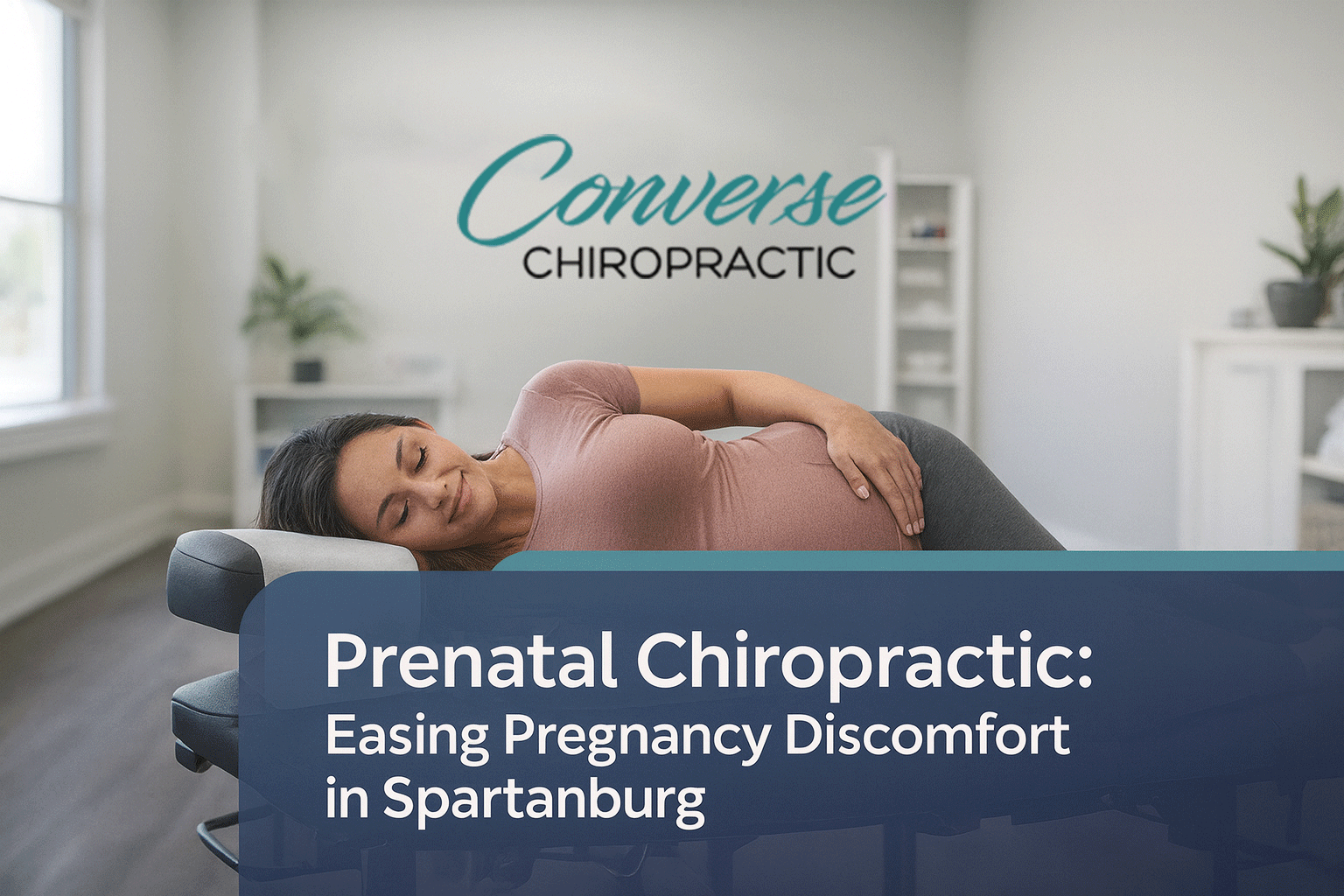
My table has a pregnancy cushion so you can lie face down comfortably early to mid pregnancy. In late pregnancy, most care happens side‑lying with pillows or in a supported seated position. These setups reduce abdominal pressure and avoid vena cava compression, a precaution supported in pregnancy body mechanics guidance.
For pelvic balance, I often use the Webster Technique. This approach focuses on the sacrum and the soft tissues around the uterus to reduce tension and encourage symmetrical motion.
Many Spartanburg moms tell me they can sit longer, sleep better, and move with more confidence once spinal and pelvic joints are moving well and tight muscles are released.
Case series and cohort studies echo those reports, showing high rates of meaningful pain reduction after manual care in pregnancy (Cohort Study).

Safety, Positioning, and When I Coordinate or Refer
Safety comes first.
I take a full history, review your pregnancy status, and coordinate with your OB or midwife when needed. Absolute contraindications to manipulation include active vaginal bleeding, ruptured membranes, placenta previa or abruption, severe toxemia, suspected ectopic pregnancy, and signs of preterm labor.
Force is always gentle, and techniques are modified by trimester. Late in pregnancy, I avoid prolonged flat‑on‑your‑back positioning and favor mobilization, drop‑assist, or low‑amplitude adjustments. This approach mirrors published recommendations for safe manual therapy in pregnancy (Systematic Review & Meta-Analysis).
What the Research Says, Clearly Stated
You deserve transparency.
Many women experience significant relief with prenatal chiropractic care. Observational studies report that 80 to 90 percent of pregnant patients improve with manual therapy for back pain. A small randomized pilot trial found spinal manipulation and exercise produced similar reductions in pain and disability. Systematic reviews point out that much of the literature consists of case series without controls, so evidence quality is limited (Systematic Review & Meta-Analysis).
In other words, the lived experience of many patients is positive, early data are encouraging, and the safety profile appears favorable when care is delivered appropriately.
Easing Back Pain and Pelvic Pressure, Day to Day
When the pelvis is balanced and the lumbar spine moves the way it should, weight is shared more evenly across the pelvic ring.
Soft‑tissue work calms spasm, improves circulation, and reduces trigger points in the glutes, piriformis, and lumbar paraspinals. Patients often report that stairs are easier, turning in bed no longer hurts, and that dull, nagging pressure in the pubic area fades.
My aim is to help your body carry the baby, not carry the pain.
Can This Support a Smoother Delivery?
Chiropractic is not a replacement for medical care, induction, or obstetric decision‑making.
That said, many mothers in my Spartanburg clinic describe easier labor after consistent prenatal chiropractic.
Where I see consistent value is comfort, confidence, and movement. Pain relief can reduce anxiety and support more active labor strategies. The World Health Organization’s antenatal care guidelines recommend non-drug pain management strategies, including manual therapies, as part of comprehensive prenatal care.
What to Expect at Your First Prenatal Visit in Spartanburg
Your first visit at Converse Chiropractic is not rushed. We talk about your pregnancy, previous births, goals for this baby, and any red flags. I assess posture, pelvic alignment, and gentle ranges of motion, then outline a plan that fits your trimester and your schedule.
- Comfort‑first positioning: side‑lying, supported belly cushion, or seated work as needed
- Gentle techniques: low‑force adjustments, mobilization, soft‑tissue release, Webster pelvic balancing
- Coordination with your team: notes to your OB or midwife when appropriate, referrals if something needs medical evaluation
Simple Strategies I Teach for Home in Spartanburg, SC
Daily habits stack up. Small changes can ease pressure on your back and pelvis between visits.
- Smart sleep setup: side‑lying with a firm pillow between knees and ankles
- Hip friendly movement: keep knees together when rolling in bed or getting out of the car
- Core and breath: gentle diaphragmatic breathing and deep core activation
- Cooling inflammation: short walks on flat ground, water walking at the YMCA
- Belt, used wisely: a pelvic support belt for longer walks or work shifts
These tips complement care for moms across Spartanburg. If you searched “pregnancy back pain relief near Spartanburg SC” or “Webster technique chiropractor near me in Spartanburg,” you are likely looking for this blend of clinic care and daily self‑care.
Trimester‑Specific Care at a Glance
| Trimester | Common complaints | Positioning | Chiropractic focus | Helpful home tips |
|---|---|---|---|---|
| First | Low back ache, early sciatica | Belly cushion or side‑lying | Very gentle mobilization, soft‑tissue | Short walks, hydration |
| Second | Pelvic girdle pain, pubic symphysis pain | Side‑lying, seated | Webster pelvic balance, SI joint adjustments | Pelvic belt as needed, stair moderation |
| Third | Pelvic pressure, back labor sensations | Side‑lying or seated only | Low‑force, drop‑assist where appropriate | Water walking, frequent micro‑breaks |
These methods reflect practical application of pregnancy safety guidance described in the clinical literature (NCBI Clinical Overview).
Local Context, Collaborative Care, and Coverage
Spartanburg families face real challenges with pregnancy comfort. Many prefer drug‑free options that let them keep working, caring for older kids, and staying active.
State and national data show that a notable share of pregnant people seek manual care for back pain. I encourage a team mindset and regularly coordinate with Spartanburg Regional clinicians, doulas, and pelvic floor therapists.
Insurance coverage varies for chiropractic in pregnancy. Some private plans contribute for spinal pain. Medicaid policies are limited in South Carolina, so many moms use health savings dollars or simple cash plans.
Ready for Pregnancy‑Friendly Back and Pelvic Care in Spartanburg?
If you are dealing with back pain, pubic bone pain, sacroiliac discomfort, or pelvic pressure, prenatal chiropractic can be a gentle, sensible step. As your trusted chiropractor, I am proud to be recognized as one of the best Spartanburg, SC chiropractor for prenatal care.
If you want a prenatal chiropractor in Spartanburg who listens, adjusts gently, and collaborates with your birth team, I would be honored to care for you at Converse Chiropractic.
Call the office or book online, and let’s build a plan that eases pain, reduces pelvic pressure, and supports the kind of birth you hope to have.
- Next step: call the office or request a prenatal evaluation on our website
- Questions: bring your OB or midwife’s recommendations, medication list, and any prior imaging to your first visit
- Service area: Spartanburg, Boiling Springs, Inman, Duncan, Greer, Moore, Lyman, and nearby communities



0 Comments